
How Does MAS Assess the “Fit and Proper” Criteria for Individuals?
Introduction to How MAS Assesses Fit and Proper Persons
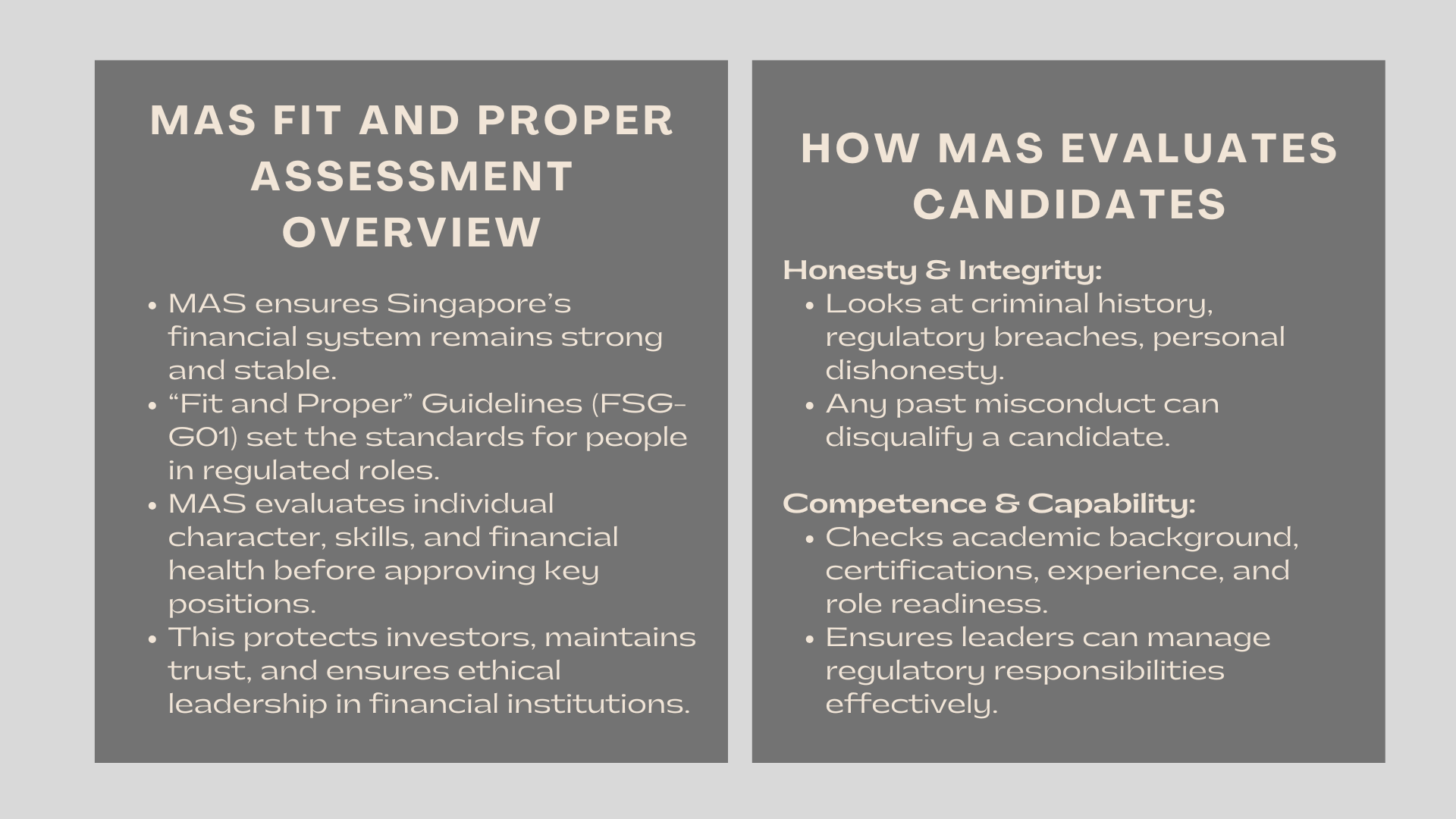
It is the duty of the Monetary Authority of Singapore (MAS) to ensure that Singapore’s financial system remains strong and stable. Ensuring that those running financial companies, banks, and licensed capital market firms are skillful, honest, and put their clients first is a main part of this task. In support of this, MAS has created the “Guidelines on Fit and Proper Criteria” (FSG-G01) that list the requirements for anyone who works in Singapore’s regulated financial sector. The MAS fit and proper assessment process for financial professionals helps maintain the credibility of the financial industry by ensuring that only trustworthy and competent individuals hold key positions.
Recognizing the approach MAS uses for these criteria helps protect people seeking to work in the regulatory side and firms needing to observe standards. This article looks at the standards that MAS uses to determine if someone is “fit and proper,” along with how they are understood in practice.
The Three Pillars of the Fit and Proper Criteria
The organization uses a set of principles to assess if a person meets the requirements. The framework relies on three important principles:
- Being honest, having integrity, and having a reputation are important.
- Skills and Ability
- Financial Soundness
All the principles are looked at together and not evaluated separately by MAS. An individual should pass all three fitness checks, and how important each factor is depends on the company ranking the individual holds.
Honesty, Integrity, and Reputation
This is most likely the most important leg to rest on. The MAS evaluates if the candidate has upheld integrity and honesty both in their personal and work experiences. Part of this process is to assess if the kids have ever taken part in any past poor behavior.
- Criminal convictions
- If someone commits a breach of fiduciary duties
- Actions taken by groups that regulate professionals
- Regulatory infringements
- Personal dishonesty
MAS will also determine if the person took part in any legal cases where their trustworthiness was in doubt. A history of suspicious acts can sometimes cause a court to consider a person unfit even when no conviction is achieved.
MAS expects those in charge to act with great ethical responsibility, since their choices affect both investors’ money and the honesty of financial systems.
Competence and Capability
In addition to looking at a person’s character, MAS assesses if the candidate has the experience and knowledge required for the position. When looking at the role of CEO or Responsible Officer for a fund management company, one is usually expected to have experience managing assets, foresight for the field, and can pursue regulatory matters soundly.
Part of the process includes checking the candidate’s academic background, work certifications, and past performance in previous jobs. It is also important for MAS to find out whether an individual has the energy and attention needed to handle many responsibilities if they serve in different roles. These detailed checks are part of the criteria for responsible officer approval under MAS guidelines, which help ensure that leadership roles are filled by capable and ethical individuals.
Financial Soundness
Although financial soundness is usually neglected, it demonstrates how disciplined and rational a person is. Assessment is carried out to check if the individual:
- A person is still in bankruptcy.
- Has gone through financial insolvency proceedings
- Has experienced problems paying back what it owes
MAS understands that hard financial situations sometimes happen, and they might lessen an individual’s sense of right and wrong, which can encourage them to act unethically. So, being in debt or handling money in other ways becomes a matter of concern when applying for such positions.
Evidence and Disclosure: How MAS Collects and Reviews Information
When checking a person’s fitness and propriety, MAS needs detailed information supplied during the application or notification. People are required to confirm they comply with the fit and proper rules and give suitable supporting papers if necessary.
MAS often checks out a wide variety of information sources, for example:
- Job history from the past and at present
- Information given by former employers
- There are databases of public records about penalties (such as public reprimands, bans, and prohibition orders).
- Information on bankruptcy or legal issues
- Where necessary, criminal records and police background checks should be included in the process.
People should not hide any negatives even if the results do not produce a formal sanction. If a company fails to disclose important facts and this is found later on, it may result in dropping all granted approvals and forbidding its operation.
It also takes into account important elements in the surrounding environment. For example, MAS could consider all the situations in detailed and then decide if a conclusion is necessary, given that the person’s role was small. Alternatively, a person who was responsible for an unsuccessful or wrongful project will receive closer examination.
Situational Assessment: Role-Based Considerations
The type of scrutiny given by the MAS changes according to the job’s unique aspect. For executive or important positions like CEO, director, or compliance officer, there are a lot more requirements. MAS expects those in such positions to follow the law and also encourage everyone in the organization to do the same.
To work as a representative covered by the Securities and Futures Act, MAS requires passing the needed tests, knowing what they sell, and taking continuous education courses.
In cases where a company operates in several countries or has branches in them, MAS checks the individual’s track record in other places and what the regulatory bodies found. Positive experiences with government regulators can help businesses, but bad findings in other countries may bring up questions.
Consequences of Non-Compliance and Importance of Governance
Should MAS decide that a person is not proper, it can deny, revoke, or put a Prohibition Order on their authorization to handle activities in financial services.
Companies are also likely to experience major difficulties. Selecting unqualified professionals may bring enforcement charges against the company, cause the business to be reprimanded in public, remove its license, and hurt its image. It is MAS’s expectation that companies should be careful when selecting people for important positions. Strengthening compliance frameworks and understanding the importance of corporate governance in Singapore’s financial sector are essential for maintaining regulatory confidence and ensuring sustainable business growth.
For a framework to be good, it should cover the following elements:
- A full set of checks for background information
- Checking the suitability of people working in the industry
- Checking up on main staff members from time to time
- Offering training to HR and compliance officers regarding the rules they must follow
Strong actions to handle personnel risks help businesses remain within the law and prevent severe disruptions in activities.
Conclusion
The “fit and proper” assessment done by the MAS looks carefully into an individual’s character, skills, and finances. Basically, fulfilling these standards is the rule for working in financial services and also shows a person’s personal ethics and responsibility.
It is important for companies to keep their hiring steps secure and strong so only the right people are put in charge of leadership or regulated duties. As a result, it demonstrates that banks are trustworthy, building a strong and respectable financial system in the future.