

Employee compliance training creates a more responsible workforce by improving staff knowledge of regulations, ethical standards, risk management, and workplace accountability. By providing structured compliance learning, organisations strengthen regulatory understanding, ethical judgment, and responsible decision-making while reducing compliance risks.
What Is Compliance Training and Why Is It Important?
Compliance training is structured training that conveys the rules, internal policies, and ethical practices that are applicable to the employees’ role. It is significant because it helps staff identify compliance risks before they become compliance violations, helping both the individual and the organisation avoid any reputational and regulatory damage.
Compliance training is not a single policy presentation, but should include how compliance is applied in real terms (data handling, financial reporting, conflicts of interest, etc.). This application-based method makes compliance employees more than aware of the rules, and why they’re there and how they’ll apply them in their everyday decision-making.
How Does Compliance Training Create Responsible Employees?
Compliance training develops responsible employees who have the knowledge and confidence to identify risk, questions and concerns and take them to the appropriate level of escalation. When a policy is understood, it is more likely to be adhered to, and the employee will not be doing a “tick the box” exercise.
Training also helps to clarify individual accountability in the context of a greater governance framework, making it easier for employees to understand the link between their actions (including approving a transaction or handling customer data) and the governance of risk within the organisation. This transparency helps to eliminate ambiguity and promote uniform and responsible action among teams, from the frontline to the senior finance team.
Why Do Organisations Need Compliance Awareness?
Compliance awareness is essential for any organisation, as regulations impact almost every aspect of the business, such as finance, data management, procurement, customer interactions, and much more. If there is no overall consciousness, it becomes the duty of a small group to adhere to compliance and not the standard for the organisation.
Raising compliance awareness throughout departments also enhances early detection, as people who are involved in everyday operations of the building are likely to spot irregularities first. This distributed awareness assists compliance officers and risk management departments, which do not have the ability to keep track of each transaction or interaction, and can be used by HR pros to reinforce expectations regularly when onboarding new hires.
| Skill | Workplace Application |
| Regulatory Knowledge | Understand legal requirements |
| Risk Awareness | Identify potential compliance issues |
| Ethical Decision-Making | Make responsible choices |
| Documentation Skills | Maintain accurate records |
| Reporting Awareness | Escalate concerns appropriately |
What Risks Can Compliance Training Help Prevent?
Compliance training ensures that individuals adhere to laws and policies, avoiding issues like regulatory breaches, data mishandling, fraud, and reporting inaccuracies, which all carry the risk of financial penalties or reputation damage. These risks are directly addressed in training by teaching employees what behaviours or controls are expected of them.
If employees have a good grasp of data protection needs, for instance, they’re less likely to mishandle sensitive data, and if they have financial control training, they’ll be better able to detect irregularities before they become serious. Solving these risks at the employee level will help alleviate the downstream audit/compliance load.
| Risk | Training Solution |
| Regulatory Violations | Compliance awareness training |
| Data Mismanagement | Data protection education |
| Fraud Risks | Ethics and control training |
| Reporting Errors | Documentation training |
| Conflicts of Interest | Ethical decision-making training |
How Does Compliance Training Improve Ethical Decision-Making?
The scenarios used in compliance training help the employee practice ethical decision-making through the use of realistic examples, including dealing with a conflict of interest or determining whether or not to accept a gift from a vendor. Instead of memorising policy statements, employees are given this practical approach to develop judgment.
Talking about grey areas will also help employees make decisions when they encounter situations that are not explicitly covered by a single rule, to help them apply underlying moral principles in a consistent manner. It’s especially useful for staff members who have to make decisions all the time when performing regulated activities, as it’s hard to memorise all the rules.
What Regulatory Knowledge Should Employees Understand?
Staff should be aware of any specific industry or regulatory requirements relevant to their role, including data protection, financial reporting, activity-specific rules, etc. Employees in regulated functions should receive role-specific content with the generic, organisation-wide training.
For finance professionals, for example, there is a need to have an understanding of financial compliance requirements, like anti-money laundering controls and correct reporting of transactions; for other employees, there is a need to be aware of data protection in general. Matching regulatory content to role makes training more relevant, more streamlined and avoids the organisation being hit with irrelevant one-size-fits-all training.
How Does Compliance Training Support Risk Management?
Compliance training is part of a risk management strategy that places employees as a “first line of defence”,
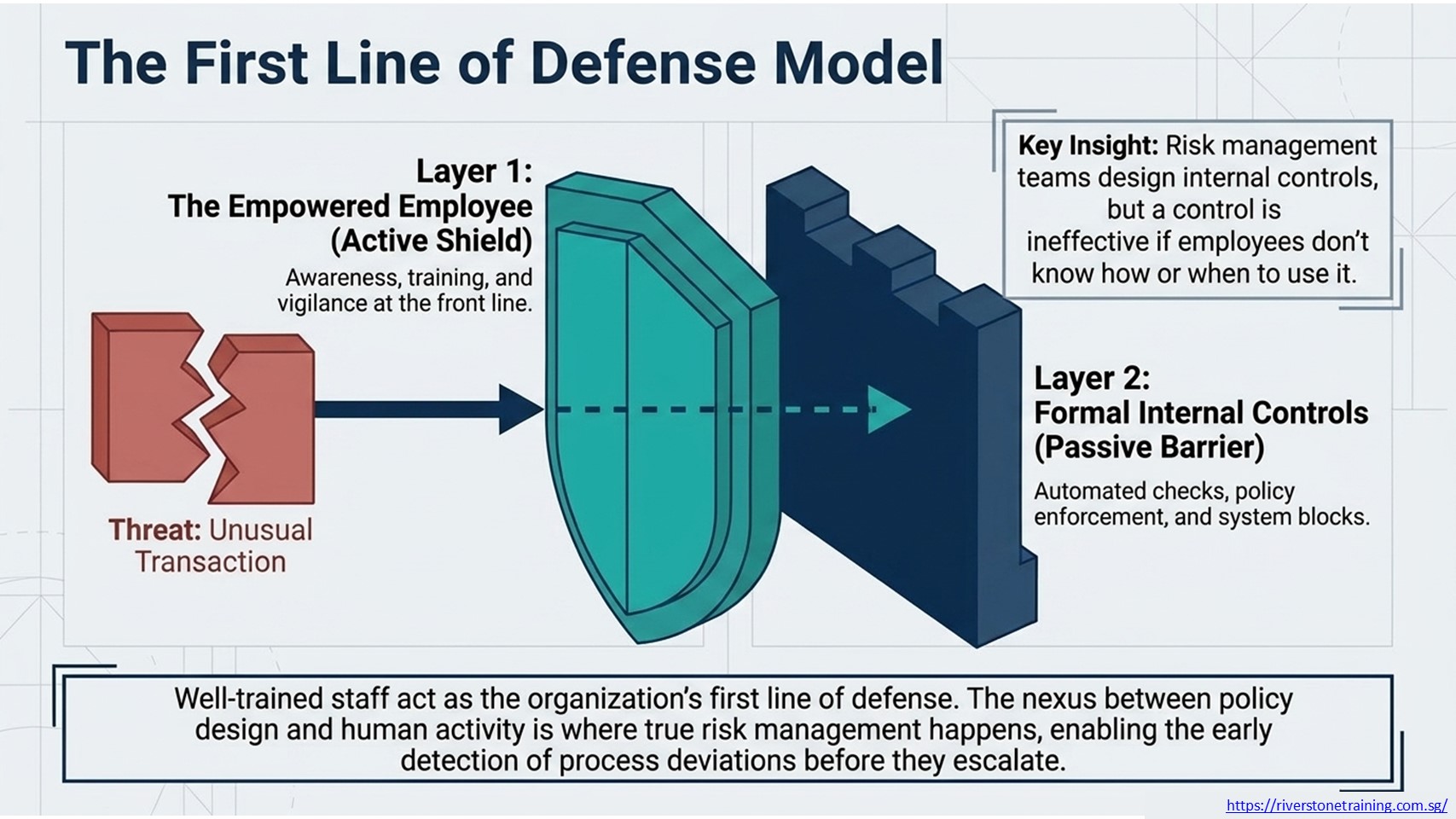
complementing formal internal controls. With well-trained staff, you can better detect unusual transactions or data handling mistakes, or process deviations before they grow into a bigger problem.
Also, training can reinforce the internal controls that the risk management teams have already put in place, as a control isn’t effective if employees don’t know how and when to use it. This nexus between policy design and employee activity is at the core of successful risk management.
Why Is Employee Accountability Important in Compliance?
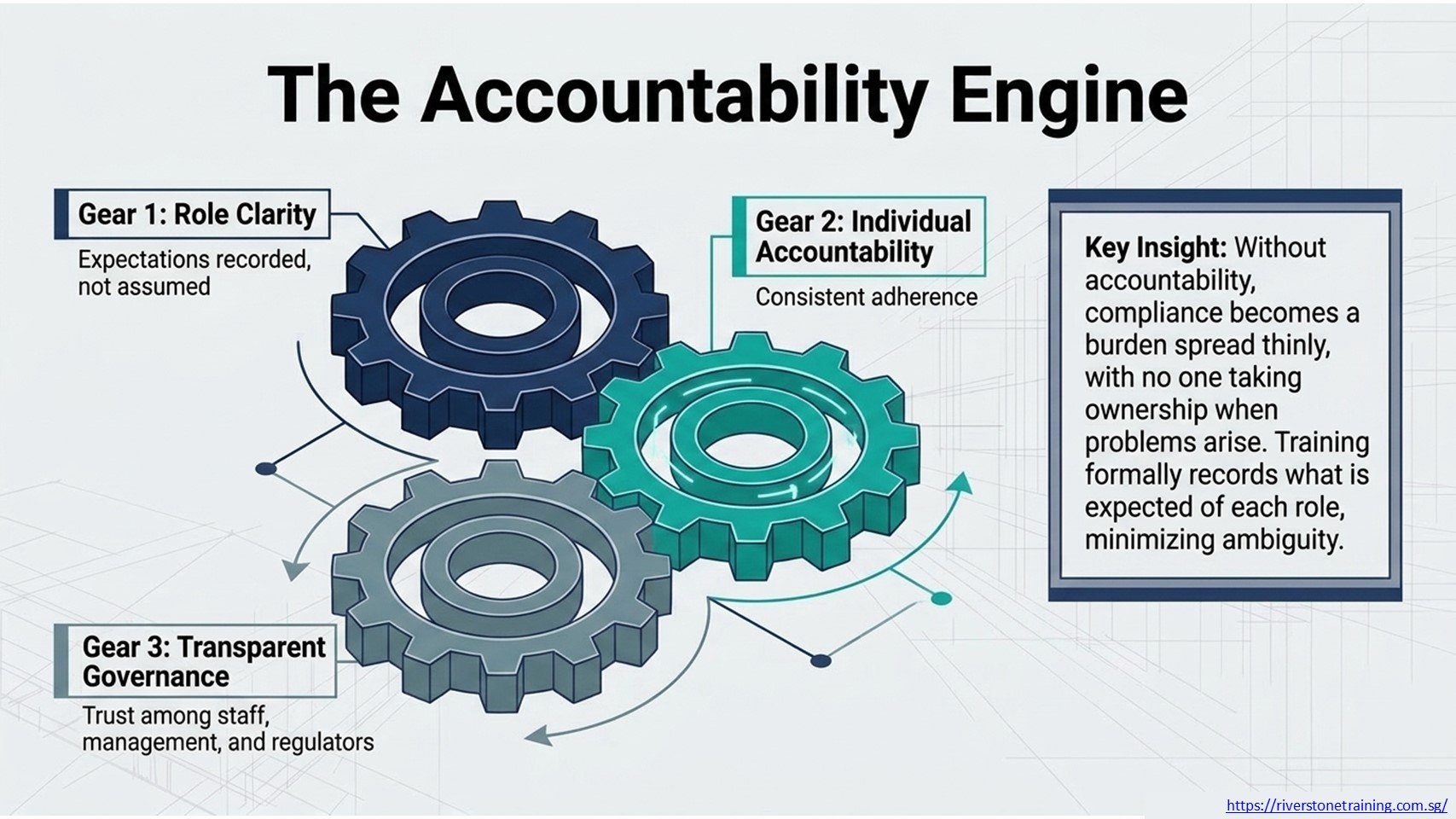
In compliance, employee accountability is crucial since compliance measures and internal controls are only effective when individuals are responsible and consistently adhere to them. If there’s no accountability, compliance can become a burden that’s spread thinly and nobody feels at ease about who should take responsibility if a problem occurs.
Training also helps reinforce accountability by being a clear indication of what is expected from each role, when and how to report concerns. This clarity fosters employee, management, and regulatory trust as responsibilities are not assumed and are recorded, thus minimising ambiguity when a problem does arise.
How Does Compliance Training Reduce Workplace Errors?
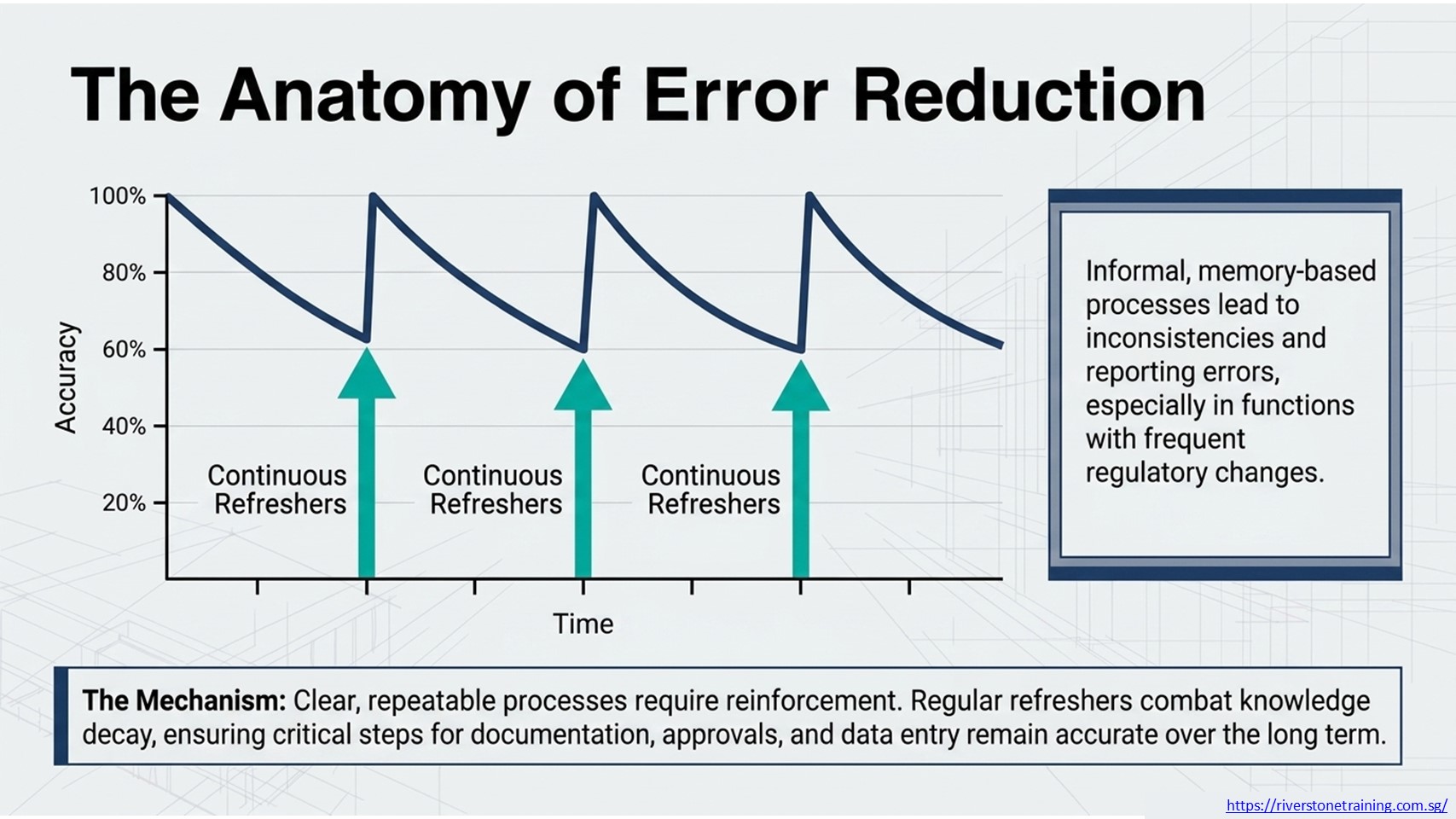
Compliance training minimises workplace mistakes by ensuring that employees perform regulated activities in a consistent way, like completing documentation, seeking approvals and data entry, which mitigates inconsistencies that can cause compliance difficulties. Clear, repeatable processes are more easily followed correctly than informal or memory-based processes.
However, regular training refreshers can also help combat knowledge decay, as workers might over time lose some memory of the steps involved, especially in less frequently used processes. Then, it is important to reinforce such processes from time to time to ensure that they remain accurate and that there are no errors in reporting or documentation, particularly in functions that may have frequent regulatory changes.
What Role Does Leadership Play in Building a Compliance Culture?
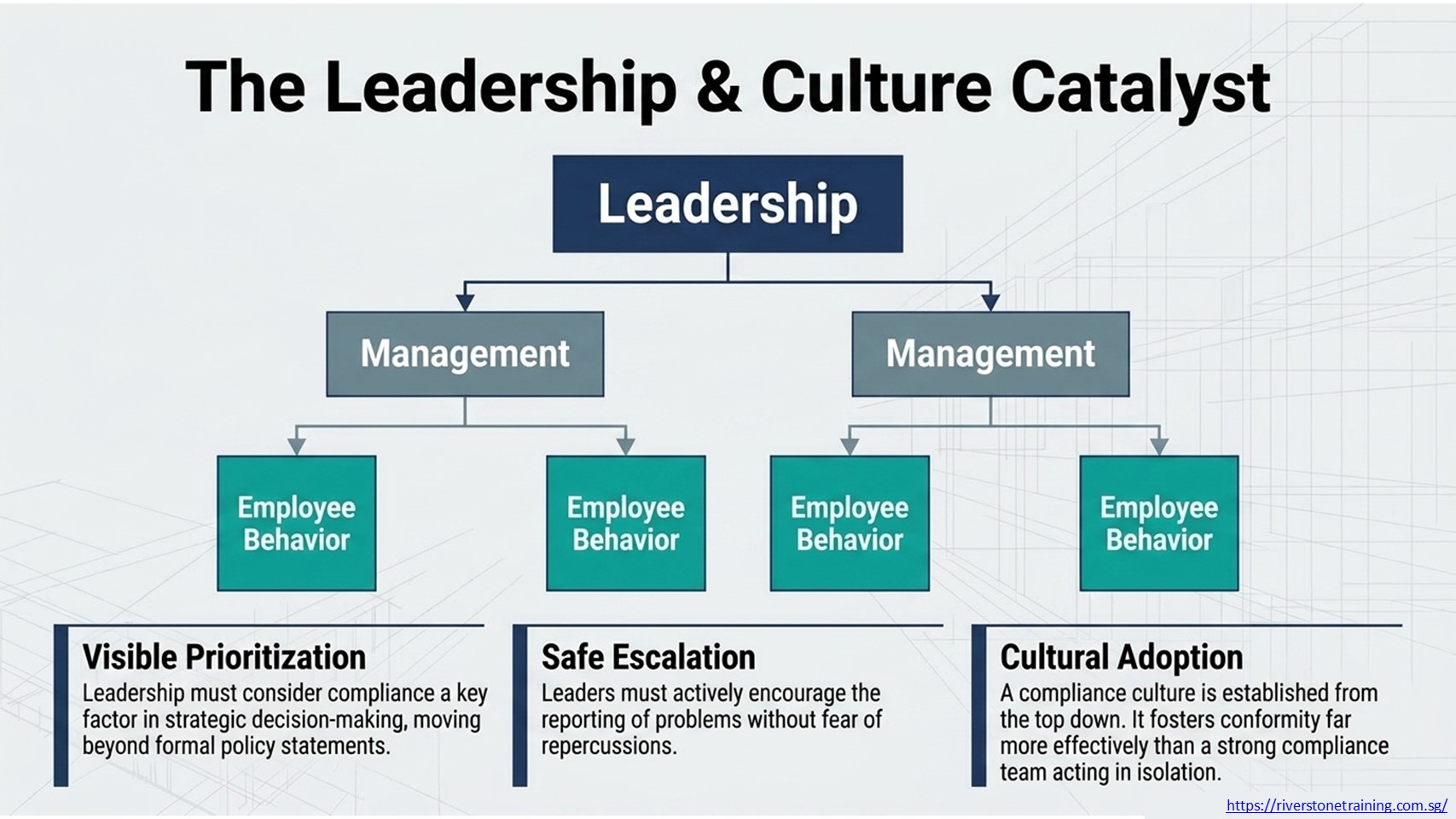
Leadership is a critical enabler of a culture of compliance as they ensure compliance is a key consideration in decision-making and that they make compliance a priority beyond the formal compliance policy statement. By encouraging employees to report issues when they see the business leaders taking the same approach, they are telling them that compliance is a true value in the organisation.
Leaders also shape the attitude of staff to reporting problems, without fear of repercussions, which directly impacts on the early identification of problems. A compliance culture is much more likely to be established from the top and to foster employee conformity than compliance instilled by a strong compliance team.
| Benefit | Business Impact |
| Better Compliance Awareness | Reduced regulatory risks |
| Improved Employee Accountability | Stronger governance |
| Ethical Decision-Making | Responsible workplace culture |
| Risk Prevention | Fewer compliance incidents |
| Leadership Reinforcement | Consistent compliant behavior |
How Can Organizations Measure Compliance Training Effectiveness?
Conformance training effectiveness may be evaluated by tracking the completion of conformance training, the score on the assessment before and after conformance training, and trends in incidents and employee reporting before and after conformance training. If there are fewer or more concerns reported early, or fewer or more violations of policies, it may indicate that training is leading to actual changes in behavior.
Manager observation and periodic compliance audits give further indications whether documented processes are being followed on a day-to-day basis. These measures enable compliance officers to gain a greater insight into the impact of training than can be achieved from completion data alone, and provide increased justification for funding ongoing training programs.
How Does Digital Compliance Training Improve Accessibility?
Digital compliance training makes it easier to get access to learning, enabling employees in multiple locations and shifts to complete training on a regular basis without disruption to operations. A well-structured rt compliance training course can combine online modules with periodic live sessions, giving employees flexibility while maintaining consistent content across the organization.
Digital formats also help with easier tracking of completion, ease of updating content as regulations change and the ability to provide refresher training effectively at scale. For businesses with regulatory requirements across various business units or jurisdictions, it is especially useful to have the same interpretation of the policies.
How Do Compliance Courses Support Career Development?
Compliance courses are a great way to develop a credential and skill set that is highly sought after in regulated industries like finance, healthcare, and professional services. Structured rt compliance training for employees helps staff build workplace knowledge and professional capabilities that support advancement into roles with greater compliance or risk responsibility.
Employees who have solid compliance knowledge will be given more sensitive tasks, such as transaction review or regulated client information. This makes compliance training an investment in a person’s career, rather than a compliance mandate.
Why Should Companies Invest in Continuous Compliance Learning?
Continuous compliance learning should be a priority for companies as regulations, industry standards, and risks evolve continuously, and a one-shot approach is not enough. Continuous training keeps workers up to date with any new requirements, rather than them relying on obsolete information.
Compliance concepts are also better retained through continuous learning because they are easily forgotten if they aren’t reinforced periodically. Compliance education, when viewed as a continuous process rather than an annual event, will result in more regular behavior from employees in the long term, and fewer compliance problems.
How Can Compliance Training Strengthen Long-Term Business Governance?
Compliance training reinforces the ongoing effective governance of the business, not just top-down control, by ingraining the regulatory awareness and ethical standards into the everyday behavior of the employees. A decentralized governance model becomes more robust and flexible to change in regulations.
Regularly scheduled compliance training also creates a historical record of employee training, which can help in audits and regulatory compliance reviews. If an organization has a history of good training, it will be able to show that the organization demonstrates good governance to regulators and other responsible parties, especially in the event of an external audit or licensing review.
Conclusion of Employee Compliance Training
Employee compliance training helps to raise awareness of compliance, foster ethical decision-making, increase employee accountability and promote ongoing learning, all of which decreases organizational risk and promotes better governance practices.
An rt compliance training course is the structured learning that an organization requires to build greater risk management and regulatory capacity throughout the organization. When combined, these approaches will convert compliance from a policy requirement to a workplace capability.
| Responsibility | Importance |
| Follow Regulations | Maintain legal compliance |
| Report Issues | Prevent potential risks |
| Protect Information | Reduce security threats |
| Maintain Ethics | Build trust |
| Complete Ongoing Training | Stay current with requirements |
Compliance education that is effective, structured, and focuses on building a risk-aware, ethical staff should be encouraged by organizations that are prepared to enhance governance and mitigate regulatory risk.