
The Ultimate Guide to Best Asset Management Compliance in Singapore
The Monetary Authority of Singapore (MAS) strongly advocates for asset management compliance. As the name suggests, it revolves around managing assets and depends on one’s particular business area. MAS demands that every company follows the internal policies, not forgetting laws and regulations accordingly. As for compliance, its role is to ensure that all the organizations do as they are required.
Why Asset Management Compliance in Singapore is Crucial for Your Firm
Adhering to asset management compliance Singapore is a key way for your company to achieve its targets. Detailed reports provide insights into progress. Beyond tracking improvements and facilitating goal attainment, strong compliance with Singapore asset management regulations also saves your firm money by avoiding hefty fines for non-compliance. Furthermore, failing to comply can severely damage your brand reputation if violations are found during an asset audit. Maintaining client trust is paramount in the asset management sector.
Companies also benefit internally from robust compliance. When workers feel secure in their work environment due to adherence to security and safety regulations, it reduces staff turnover and improves overall productivity. Therefore, compliance, including MAS compliance in Singapore, contributes to a stable and efficient workforce.
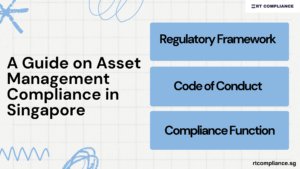
Complete Guide to Asset Management Compliance in Singapore
In this Singapore asset management guide, we explore two main types of asset management compliance. Understanding these categories is essential for both individuals and institutions managing assets in Singapore’s evolving financial landscape.
- Internal Compliance in Singapore Asset Management Firms
It is the management that sets these rules and regulations. The company’s customers and employees are obliged to follow them. Its role is to maintain the quality of its products and services. For example, an audit can be easier and more successful if papers and documents were in good shape. Therefore, regulations such as employees ensuring that that’s the case is something every department should comply with at all times.
- External (Regulatory) Compliance in Singapore’s Asset Management Industry
It is often referred to as regulatory compliance. In this case, it is the role of various government authorities to come with them. Compliance can be based on the employees’ safety, quality and quantity of the services, use of valid software, and formalization and documentation of everything.
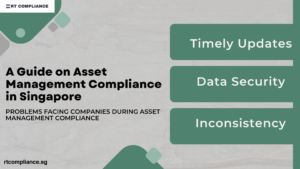
Problems Facing Companies during Asset Management Compliance
If it were easy, rules and regulations might probably have been overlooked. Therefore, it is no surprise that there are various problems as firms thrive on meeting best asset management compliance. Check them out!
- Timely Regulatory Updates in Singapore Asset Management
It is usually an issue significantly as your business grows. Rules and regulations keep changing, and as a business, there is no other choice but to keep up with the changes. Otherwise, you might end up paying fines and penalties.
- Data Security Challenges in Singapore Asset Management
One way of complying with the best asset management rules and regulations is keeping data. The fact that cybercrimes keep rising has made it hard for companies to keep the information safe. Some have sensitive data, which becomes a challenge.
- Inconsistency in Compliance Practices Among Singapore Firms
It has also become hard to track progress and improvement without a constant baseline. Lack of a definite standard of compliance documentation and protocols has been quite a challenge. It makes asset management compliance difficult, time-consuming and costly.
- Keeping Up with Singapore Asset Management Compliance Standards
Market trends also keep evolving, and it is up to the firm to evaluate if the quality is at par with that all the time. Coping up with the trends all the time has become complicated as well.
Conclusion
Trust is crucial to any organization because that’s something many clients consider before choosing one. To ensure that yours can be trusted, asset management compliance is critical. It has the benefit of an excellent brand reputation and much more. It may not be easy, but it is worth the trouble in the final run.