

A compliance certification course teaches professionals how to work practically to understand the regulatory risks, how to apply compliance controls, and how to assist in corporate governance. Learners develop the risk management, monitoring and ethical decision-making capabilities that are required by organizations to fulfil legal and regulatory compliance requirements through a structured course in rt compliance.
What Is a Compliance Certification Course?
A compliance certification course is a structured training course that helps professionals understand, apply, and enforce regulations in a business environment. It integrates aspects of regulatory theory with learning activities to enable them to translate rules into day-to-day practical actions in the workplace, rather than just a legal textbook.
Generally, the students learn about risk assessment, internal controls, reporting requirements, and governance processes. The aim is legal awareness, but also to be able to shape and manage compliance processes in such a way that they safeguard the organization for years to come against regulatory risks, fines, and reputational damage.
Why Is Compliance Knowledge Important for Professionals?
The need for compliance knowledge is important because regulators will call to account both the individual and the entity for noncompliance. Experts with knowledge of compliance regulations can identify issues in their early stages and prevent them from becoming fines, license revocation, or damage to reputation, which can take years to repair.
Compliance knowledge is not just about avoiding penalties; it’s also about making better business decisions. For instance, if a finance manager is aware of compliance limits, he or she can set up transactions properly the first time and avoid having to redo the work after an audit reveals a problem, which will save time and minimize operational risk.
What Regulatory Knowledge Will You Learn?
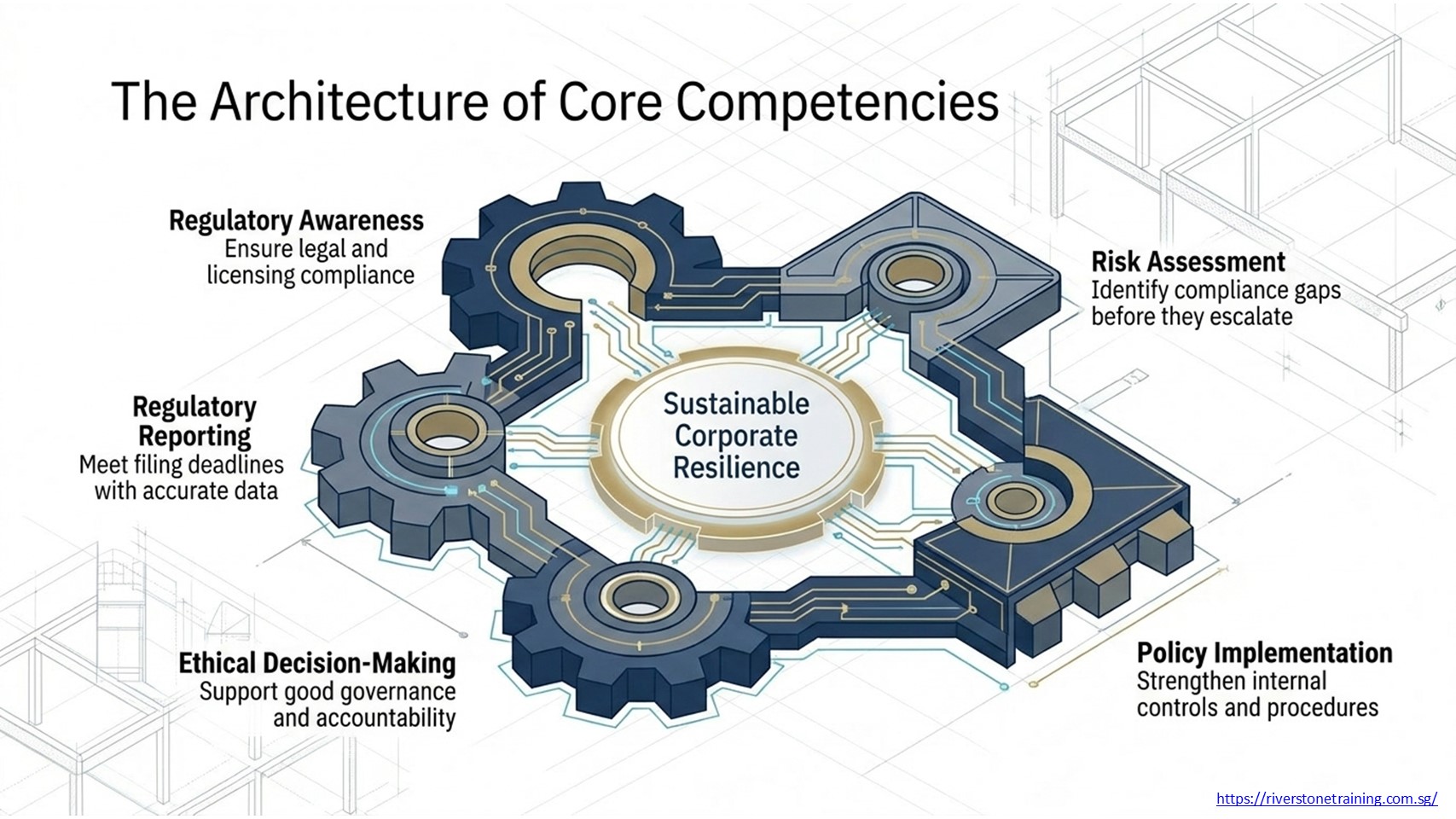
Learners become familiar with the regulatory context of their sector, including the licensing requirements, reporting requirements, and prohibited practices. That includes knowing which regulator regulates what, and what kind of documents are needed to show that it complies with the regulatory requirements during an inspection or audit.
Courses also include knowledge of how the rules change, so that professionals can stay updated on the changes and adapt their internal regulations. That ensures that compliance programmes are up to date and not based on the assumptions of what regulators expect, particularly in rapidly changing sectors like data protection and financial crime.
How Does a Compliance Certification Course Teach Risk Management?
A compliance certification course is used to teach risk management through a series of exercises to identify, rate and prioritize regulatory risks. The case-based exercises demonstrate how a single gap, for instance, incomplete customer records, may allow a company to be at risk across multiple categories.
Learners also develop risk registers and control matrices, matching a risk to a mitigation action and an individual who is responsible for that action. The systematic framework empowers professionals to shift from simply reacting to issues to taking a more proactive stance in planning for risks that are likely to be identified by regulators.
What Internal Control Skills Are Developed?
Skills learned internally include setting up approval processes, separation of duties, and establishing monitoring points that will detect mistakes before they become violations. Learners learn how, for example, in procurement, weak controls can result in compliance risks throughout the organisation.
Training also includes learning about control testing, which will help them ensure that a control is operating as intended, not just on paper. This distinction is crucial for passing external audits and regulatory inspections, as regulators are increasingly looking for operating effectiveness, and this is not just about documentation.
How Do Professionals Learn to Identify Compliance Risks?
By analysing genuine transaction behaviour, customer activity, and transaction gaps with known red flags, professionals can gain insight into compliance risks. Case studies are often applied anonymously during exercises for learners to practise identifying warning signs in a safe environment before they do so on the job.
Structured questioning is also taught in courses, and is a way to uncover risks that may be hidden in a process and would not be caught by a regular checklist. One of the most useful skills of experienced compliance experts is investigative.
How Does Compliance Training Improve Corporate Governance?
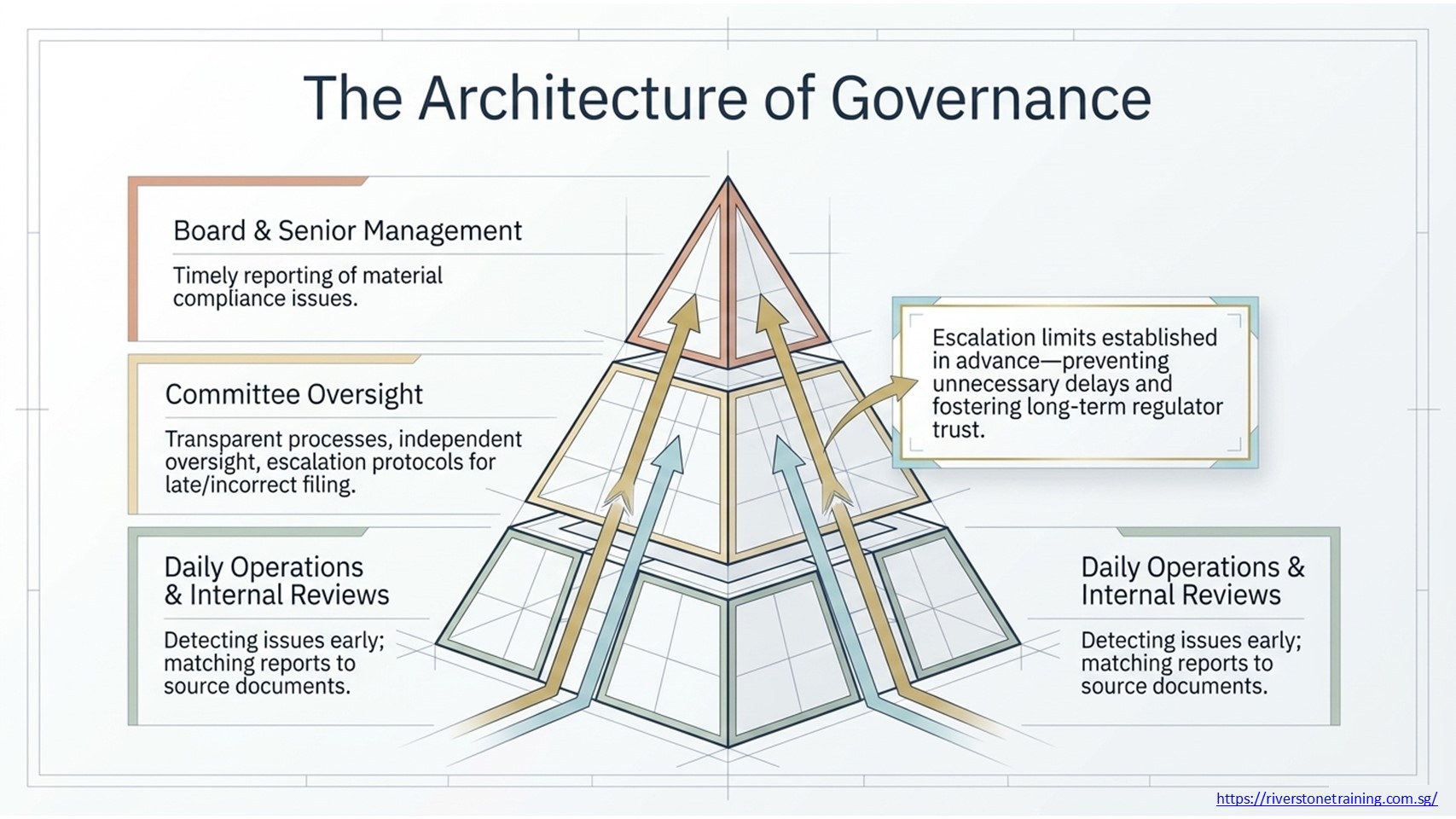
Compliance training helps to enhance the transparency and accountability of the reporting line, decision-making power, and accountability at all levels of the company. Professors gain insight into the importance of an effective governance structure in speeding up and enriching regulatory reviews and alleviating confusion over whose responsibility is what.
Training also includes the processes of committees and independent oversight, how the role of the committees should be made transparent to the board and senior management, and how to ensure that material compliance issues are reported to the board and senior management in a timely manner without unnecessary delay, as well as how to establish escalation limits in advance.
What Ethical Decision-Making Skills Are Taught?
Ethical decision-making skills taught cover identifying conflicts of interest, using a consistent ethical framework, and raising issues when uncomfortable. Students explore situations where the easy way to do things is not the right way, and where doing it quickly is not the right way.
Courses also reinforce judgement under stress, helping professionals stop and think about how they would act in a situation based on company policy and regulatory expectations, and not resorting to doing something convenient or deferring to another more senior colleague without question.
How Does Compliance Certification Support AML and Financial Crime Prevention?
Compliance certification can help with the prevention of AML and financial crime by educating learners on how to perform customer due diligence, how to detect suspicious activity in transactions, and how to report these suspicious transactions in a proper manner. This includes understanding beneficial ownership checks and enhanced due diligence for higher-risk customers and jurisdictions.
Learners also learn typologies in the context of money laundering and terrorist financing, thus being able to identify patterns instead of having to rely solely on the alerts generated by the system, which may not capture the context of a customer relationship or industry.
How Do Compliance Professionals Handle Regulatory Reporting?
Compliance professionals deal with regulatory reporting by ensuring that the records are accurate, the deadlines are adhered to, and reported data is in line with the underlying source documents. It teaches the correct way to prepare reports that stand up to the regulators’ gaze and aren’t just done to comply with the paper filing requirement.
Classes also cover escalation protocols for late and incorrect filing, which is essential for fostering trust with regulators in the long run and ensuring accuracy and transparency in filing practices.
How Can Compliance Training Improve Workplace Accountability?
Compliance training enhances accountability in the workplace by providing employees with an understanding of their personal roles in the compliance program. Where there is clear knowledge of expectations, there is minimal risk of gaps in each business function that may occur due to assumptions or ambiguity.
Training also provides indicators to measure the performance of compliance activities, like the timely acceptance of a policy or the completion of a due diligence check, which helps to create measurable accountability instead of abstract accountability and provide a basis for management review.
How Are Compliance Skills Applied in Daily Business Operations?
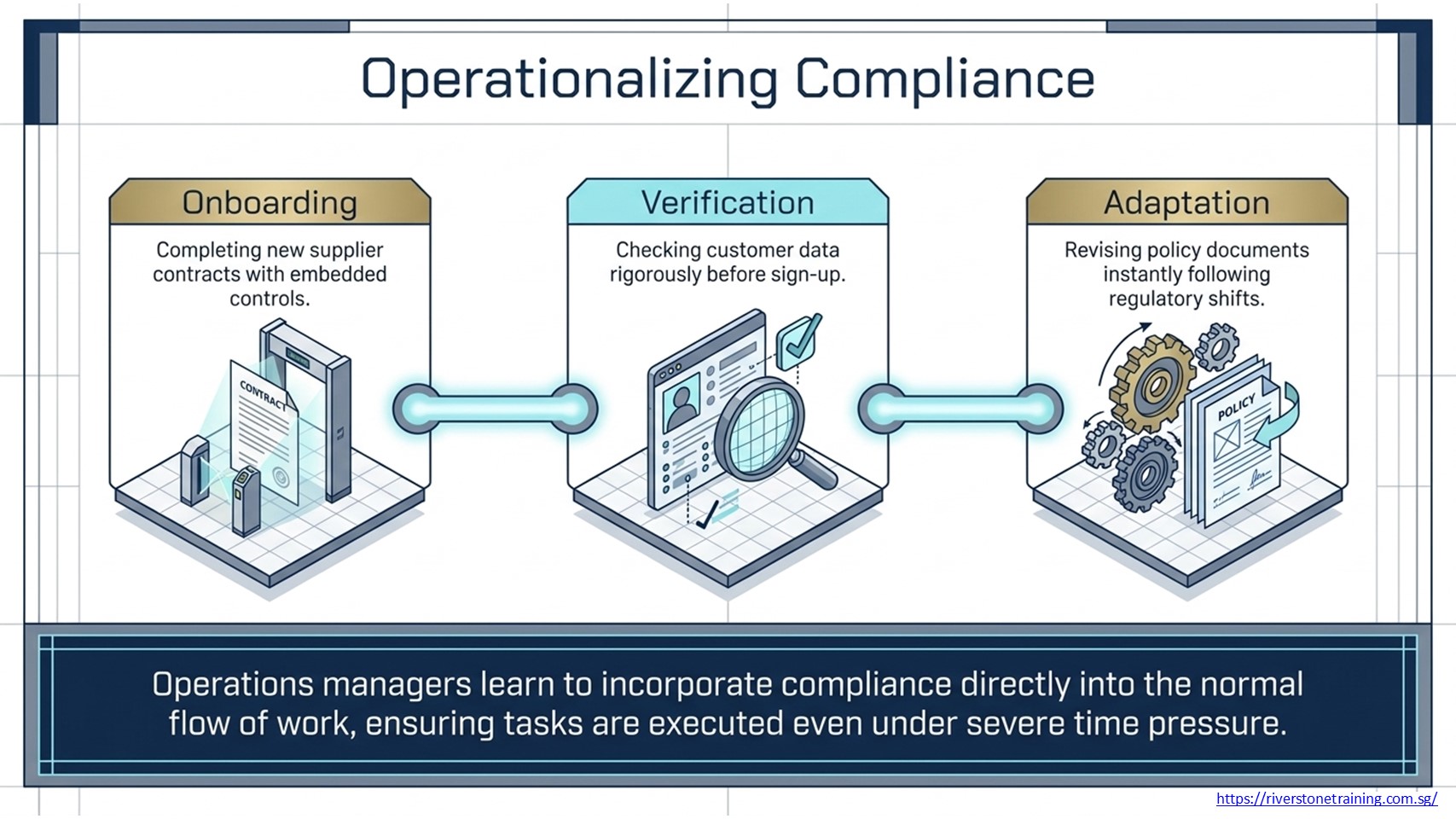
Compliance skills are used on a regular basis in tasks that involve completing new supplier contracts, checking customer data before signing them up, and reviewing and revising policy documents following changes to the regulations. These activities demand more practical skills that are instilled through certification training than merely theoretical knowledge.
Compliance skills are used by operations managers to incorporate the compliance tasks themselves into the normal flow of work, so that these tasks are carried out without being considered an optional ‘extra’ that may be omitted under time pressure.
How Does Corporate RT Compliance Training Support Organizations?
Corporate rt compliance training assists the organization by creating a common level of compliance understanding not only in compliance, but throughout the organization. This helps to minimise the chance of confusion within teams in relation to similar regulatory requirements.
Organizations that invest in structured programmes, such as an rt compliance certification course, give employees the tools to apply governance principles consistently across business units and geographies.
How Can Compliance Certification Support Career Development?
Compliance certification helps professionals with career advancement by providing them with a recognized credential that indicates they have the practical regulatory competence, which is essential in the eyes of employers. Frequently, certified professionals are looked at for more significant roles such as compliance officer, risk manager, and governance specialist, and are trusted with making regulatory decisions independently earlier in their careers.
These skills are transferable across sectors too, as basic skills such as risk assessment, due diligence and ethical judgment are relevant in banking, insurance, corporate services and more. This mobility enables qualified persons to have greater flexibility in assessing career options in various regulated sectors.
Why Is Continuous Compliance Learning Important?
Continuous compliance learning is crucial as regulations constantly evolve and a certification obtained years ago may not correspond to the expectations of the moment. By staying up to date with the latest rules and enforcement trends and new risk areas like digital assets, data privacy, and cross-border reporting requirements, ongoing learning enables professionals to stay relevant.
Professionals often enroll in specialized programs, like corporate rt compliance programs, to gain in-depth knowledge of a particular compliance domain that fits their own group’s framework and industry.
Compliance Skills Developed
The table below shows a summary of the key skills acquired in a compliance certification course and the application of those skills in the workplace.
| Skill | Workplace Application |
| Regulatory Awareness | Ensure legal and licensing compliance |
| Risk Assessment | Identify compliance gaps before they escalate |
| Policy Implementation | Strengthen internal controls and procedures |
| Ethical Decision-Making | Support good governance and accountability |
| Regulatory Reporting | Meet filing deadlines with accurate data |
Compliance Responsibilities
Compliance professionals are assigned certain duties to ensure that the organization is on track with the regulatory requirements.
| Responsibility | Purpose |
| Policy Monitoring | Maintain ongoing compliance with regulations |
| Regulatory Reporting | Meet legal and licensing obligations |
| Internal Reviews | Detect compliance issues early |
| Employee Guidance | Promote a strong compliance culture |
| Investigation Support | Resolve compliance breaches thoroughly |
Risk Management Competencies
Risk management skills obtained from certification directly impact the bottom line of a business.
| Competency | Business Benefit |
| Risk Identification | Prevent compliance failures before they occur |
| Control Evaluation | Improve overall governance standards |
| Incident Reporting | Enable faster issue resolution |
| Ongoing Monitoring | Support continuous compliance improvement |
| Audit Readiness | Reduce disruption during regulatory reviews |
Career Opportunities After Compliance Certification
Certification opens the door to a variety of career opportunities related to compliance.
| Role | Compliance Application |
| Compliance Officer | Regulatory oversight and policy enforcement |
| Risk Manager | Enterprise-wide risk management |
| Internal Auditor | Independent compliance reviews |
| Governance Specialist | Policy implementation and board reporting |
| AML Analyst | Transaction monitoring and reporting |
Conclusion: Building Practical Compliance Competence
A compliance certification course is designed to enhance the regulatory knowledge, risk management skills, and ethical judgment that a compliance professional must have to ensure that their organization avoids failure. Regulatory reporting, internal control design, and other skills are becoming more vital as regulators look the other way in more industries.
Professionals seeking to advance their careers should consider a structured rt compliance certification course, while organizations aiming to build a resilient, compliant workforce should invest in corporate rt compliance training to strengthen compliance capability at every level.