

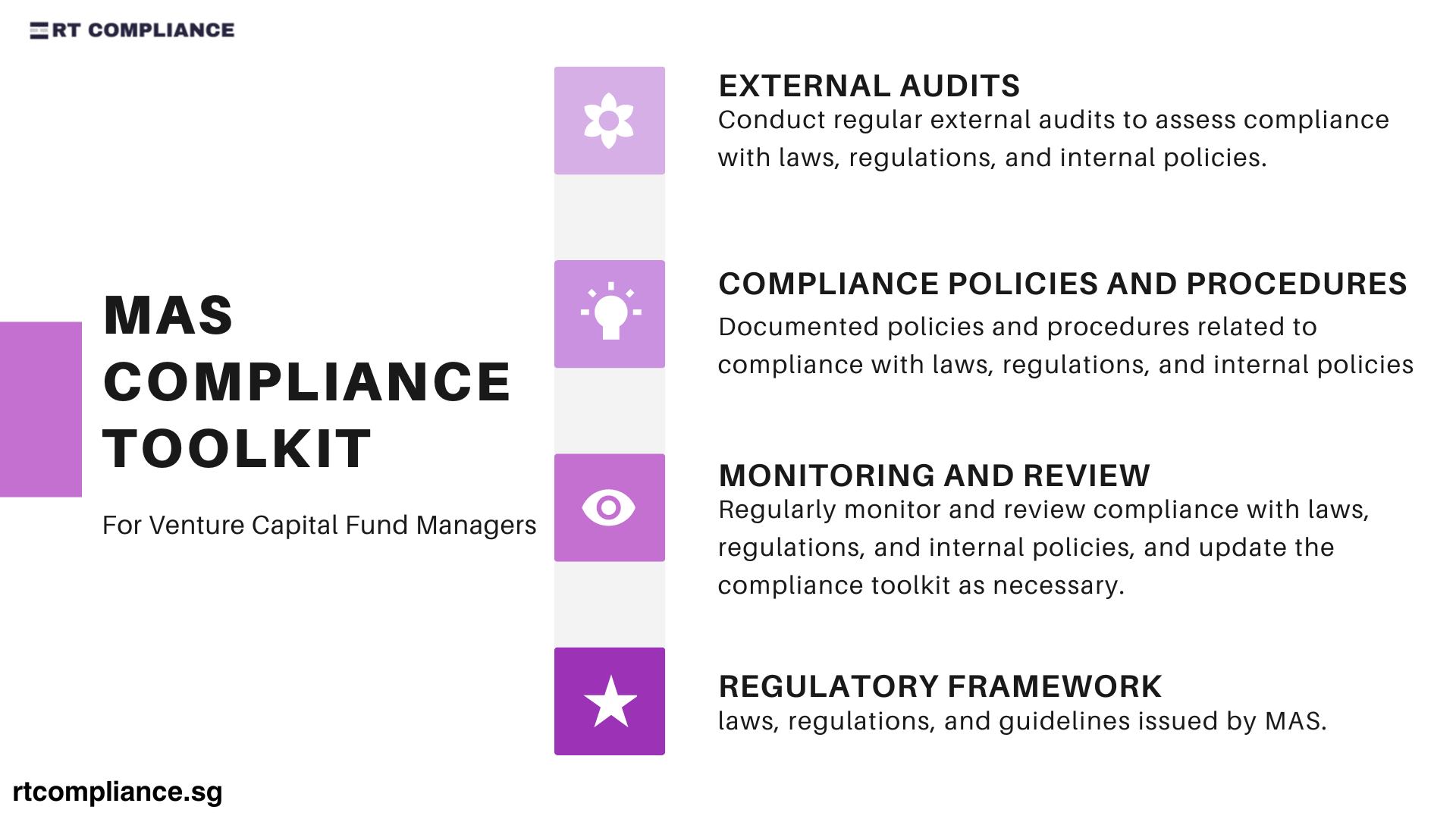
MAS Compliance Toolkit for Venture Capital Fund Managers (VCFM) in Singapore: Guidelines, Licensing & Reporting
On October 20, 2017, the Monetary Authority of Singapore (MAS) declared that a streamlined regulatory framework (VCFM Regime) for venture capital fund managers (VC managers) would take place immediately. This comes during a public consultation on the controversial draft regulations earlier this year.
Simplified VCFM Regulatory Regime Under MAS Compliance in Singapore
The VCFM (Venture Capital Fund Manager) is designed to streamline the MAS licensing process for venture capital fund managers, making authorization easier and faster. This is part of the broader MAS compliance toolkit for VCFM aimed at encouraging innovation while maintaining regulatory standards:
- Under the MAS regulations for venture capital fund managers in Singapore, VC managers are not mandated to appoint directors or representatives with a minimum of five years’ experience. This regulatory flexibility is a key benefit of the VCFM compliance regime, enabling startups to participate in fund management under streamlined conditions.
- VC fund managers would be exempt from the capital standards and corporate ethics regulations that relate to all fund managers.
However, VC fund managers must meet MAS Fit and Proper Criteria, including standards of financial soundness, integrity, and credibility. As part of ongoing MAS compliance for venture capital funds, fund managers are also subject to anti-money laundering (AML) obligations under the Securities and Futures Act (SFA)
Under the VFCM Regime, VC managers are only permitted to control funds that:
- Put at least 80% of invested funds into shares explicitly offered by unlisted business ventures that have been in existence for no longer than 10 years at the initial investment period.
- spend up to 20% of invested capital in the unlisted business projects that do not follow the criteria in item (a) above (i.e., they have each been in operation for over ten years at the period of the initial purchase, and/or the investment is made by secondary market acquisitions).
- must not be eligible for subscription continuously and should not be redeemable at investor’s discretion; and
- is only available to licensed and/or institutional investors (every one of them as defined under SFA).
According to the public consultation earlier in the month of February, the permitted funds were those that specifically invested in the unlisted business projects that had been formed or incorporated for not a period of over five years at the period of the initial investment.
The extension of this requirement is intended to give VC managers more versatility. The MAS also explained that the ten-year criterion applies to the operating portfolio firm, not an entity, trust, or even any other vehicle set up to retain the fund.
Although the MAS did not wish to recommend the fund-raising duration or the number of closings that could occur during that period, the components of the finances may not be eligible for a new subscription until the fundraising period has ended and should only be recycled at the conclusion of the fund’s existence.
VCFM Licensing Process and MAS Application Requirements in Singapore
As the venture capital fund manager, a new applicant can apply for the capital markets services license. Until transitioning into the (Venture Capital Fund Manager) Regime, a current holder of the capital markets services license for investment management or a listed fund management firm can ensure that any of the funds it oversees follow the eligibility requirements (as described above). It will not be needed to go through a new certification procedure or alert the MAS of any capital declines if it satisfies the qualifying requirements. Still, it will be necessary to inform the MAS of its plan to be a VC manager by stating so.
MAS Reporting and the Notification Obligation for VCFM in Singapore
Under the MAS regulatory requirements for VCFM, the fund managers have to file annual declarations, report any changes in particulars to MAS and adhere to reporting deadlines. Examples are of updates on important personnel, fund structures or outsourcing arrangements. Failure to comply may result in MAS inspects or audits.
VCFM Record Keeping and AML Requirements
As a stipulation of MAS compliances for venture capital fund managers in Singapore, firms are required to keep records of at least 5 years, ranging from investment decisions, due diligence documents, and correspondence with the investors. Anti-Money Laundering (AML) rules for VCFMs stipulate that firms should practice client due diligence and reporting of suspicious transactions.
What will Cause a MAS Inspection or Audit for VCFM?
MAS can trigger an inspection on VCFM firms due to anomalies in fund’s activity, complaints by investors, missed reporting obligations. When conducting audits, the MAS may check internal controls, outsourcing policies, compliance with the VCFM licensing framework. Frequent update and tidy-keeping minimise risk exposure.